July 23, 2026
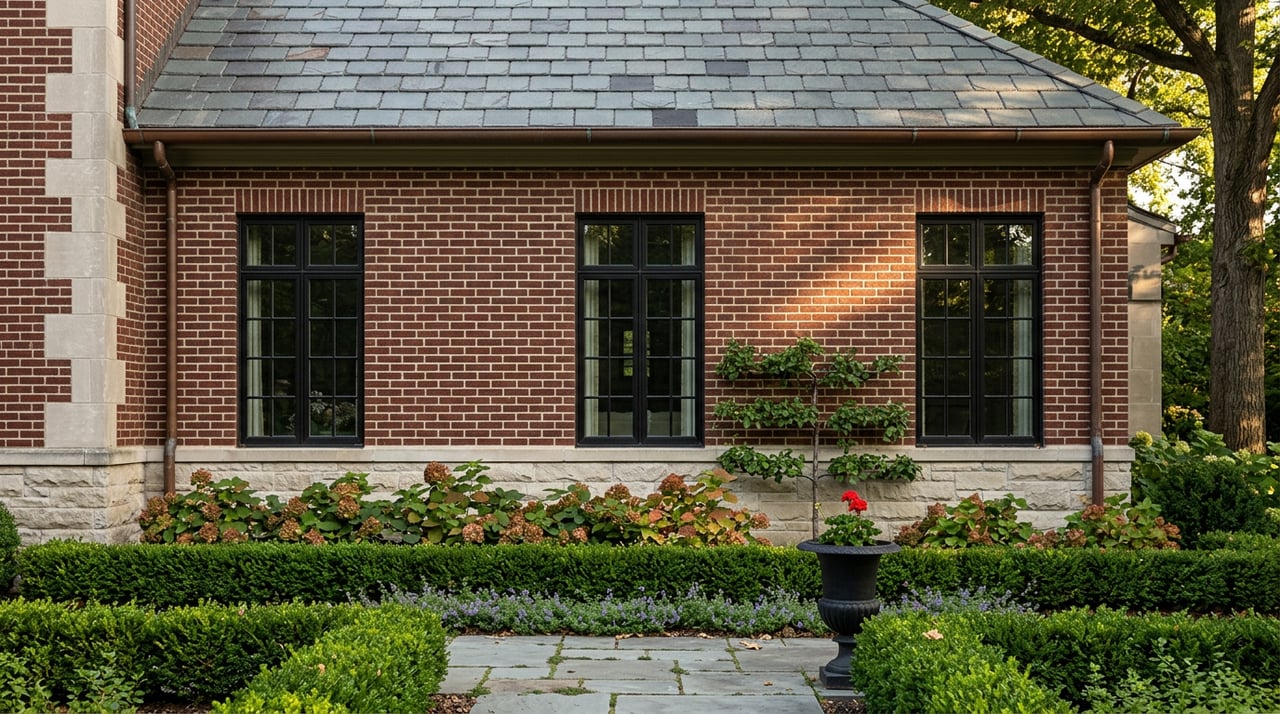
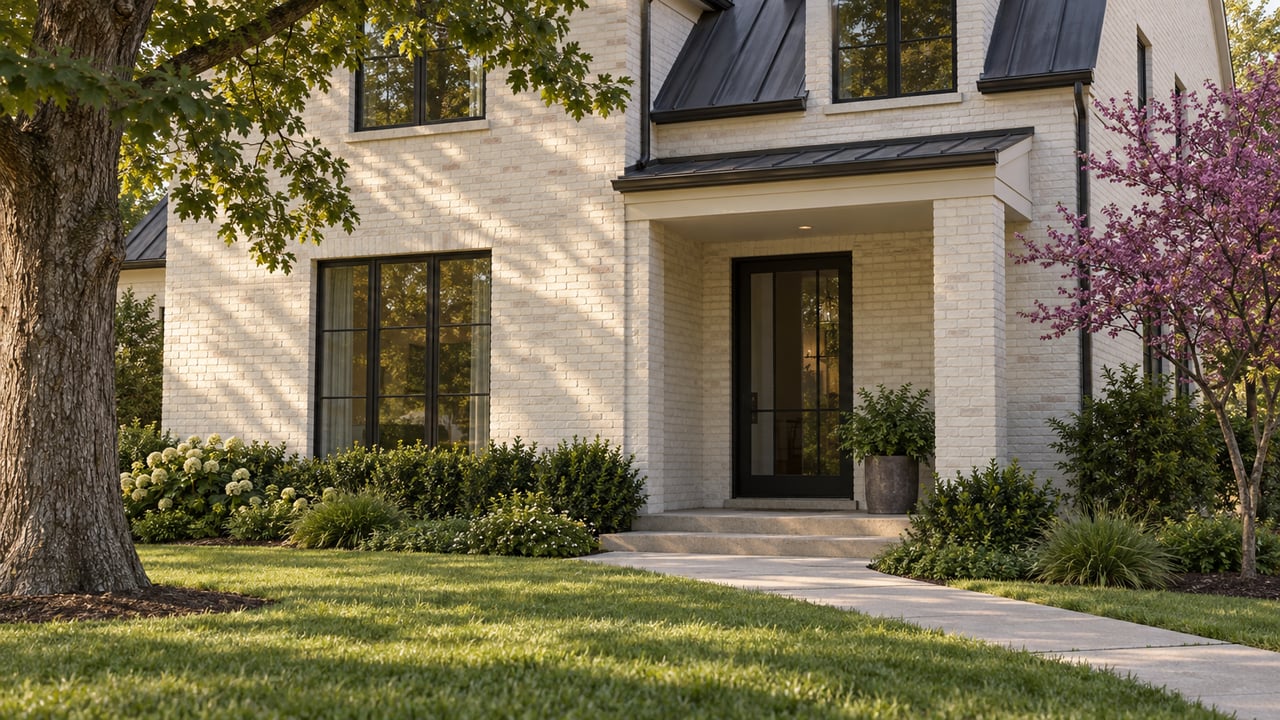
Walk any block off Mission Drive and the story looks settled. Limestone gables, slate roofs, hedged boxwood, a Tudor from 1927 sitting comfortably next to a restrained new build. What you are seeing is not accident or taste. It is the visible output of a five-resident board that meets every two weeks inside a small city hall on the Kansas side of the state line, and it is the single most important variable most out-of-market buyers never price into their offer.
In Mission Hills, the Architectural Review Board is a price-setter. Two houses on the same street, at the same square footage, do not carry the same value if one has flexibility to add a pool wing and the other sits inside a platted setback that would trigger a variance fight. The median you see on Zillow or Redfin flattens that difference. Your offer should not.
The Mission Hills code is unusually broad about what counts as a permit-triggering change. City Chapter 5 requires a building permit for most renovation and construction work, including interior remodeling, additions, decks or patios, driveway and roof replacements, fences and walls, generators, irrigation systems, new structures, pools, and sport courts. Painting and wallpaper are out. Almost everything else you would want to change on a $2M house is in.
Then comes the review layer. The Architectural Review Board must approve any exterior alteration before a permit can be issued, and the Professional Review Panel reviews Substantial Construction projects and makes a recommendation to the ARB on whether the project should be approved, approved with stipulations, or denied. The panel is not a rubber stamp. There is a non-refundable fee of $2,000 that must be paid when the project is submitted to City Hall, and that fee does not roll into the permit.
Timelines are the part that surprises relocating buyers most. Building permits for new homes require ARB approval, and proposed plans must be submitted at least 7 weeks before the ARB meeting when the review will take place. A contractor working across the metro summarized the practical reality with an unusual candor: Mission Hills is the smallest, most carefully governed city in the Kansas City metro, and a Mission Hills build is the most paperwork-heavy project in the metro by a wide margin.
The headline numbers first, so the interpretation has something to sit on.
| Source | Metric | Value | As of |
|---|---|---|---|
| Zillow ZHVI | Typical home value | ~$1.54M, up 11.6% YoY | Jan 31, 2026 |
| Redfin | Last-month median sale | ~$1.7M, up 15.7% YoY | Nov 2025 |
| Redfin | Median days on market | 42 days vs. 15 a year earlier | Nov 2025 |
| Movoto | Median list price | $2.04M at $484/sqft | Jul 2026 |
| Homes.com | Trailing 12-month median sale | $1,595,000 | Mid-2026 |
Those five numbers do not agree, and they are not supposed to. Redfin's city page showed a median sale price near 1.06 million dollars as of January 2026, while Zillow's ZHVI was about 1.54 million dollars as of January 31, 2026, and small monthly samples can make medians swing. Mission Hills sells roughly ten houses in a given month in a strong month. One estate above $5M drags the median one direction. A ranch in Sagamore Hills drags it the other.
The signal underneath the noise is the days-on-market shift. On average, homes in Mission Hills sell after 42 days on the market compared to 15 days last year. Combine that with the ARB workflow and a pattern emerges. Buyers writing at the top of the market are underwriting more than the house. They are underwriting a future project that will move through the ARB on the ARB's schedule, not theirs. When rates are jumpy and buyers get pickier, the houses that clear quickly are the ones where the obvious next project (pool, patio, primary suite expansion) looks straightforward under the Design Guidelines. The ones that linger are frequently the ones with a wrinkle: a platted setback that no longer fits the current code, a lot too small to add a rear wing, a non-conforming fence that would need a variance to replace in place.
The ARB posts its agendas. Read three months of them and you stop guessing about which quirks matter.
None of that shows up on a listing sheet. All of it shows up in an offer strategy if you know to look.
Greenspace is the other quiet lever. Section 2.7.3.A on page 106 recommends that LS-6 and 7 properties have a greenspace no less than 70% of the lot area. On a smaller lot with an existing wide driveway and pool deck, that 70% floor can quietly foreclose the outdoor kitchen the buyer was already sketching in their head.
The right diligence is not exotic. It is specific.
Sellers who treat Mission Hills like any other Johnson County listing leave money on the table two ways. They fail to package the ARB story, and they price against a comp set that does not exist.
Package the story. If your home has a clean ARB history, an existing greenspace cushion, and no platted-setback conflicts, that is a marketing asset. It should live in the listing materials the way a new roof does. It shortens the buyer's diligence and widens their willingness to pay.
Price against the right comps. In low-turnover luxury areas, appraisers may need a wider set of comparables, and Mission Hills is a textbook low-turnover luxury area. A listing agent who has not already thought about the appraisal comp set before the first showing is planning to renegotiate after the offer. The Red Bow Standard treats appraisal defense as part of the listing strategy, not a post-contract scramble.
Does the ARB regulate interior work? Building permit applications for interior projects are reviewed for code compliance by the City's Codes Inspector and then reviewed for approval by the City Planner, while building permit applications for exterior changes require ARB approval prior to Codes and Planner review. Interior remodels still need a permit under Chapter 5, but they do not go before the board.
How binding are the Design Guidelines vs. the Code? The Code sets hard requirements. The Guidelines set recommendations that the ARB weighs when it votes on the required findings for a project. In practice a Guideline recommendation carries real weight, and projects that miss one are often continued to a later meeting for revision rather than approved.
What does this mean for a first-time Mission Hills buyer coming from Overland Park or Leawood? The house-hunting muscle memory from other Johnson County suburbs does not translate cleanly. In Overland Park, a fence swap is a weekend and a permit fee. In Mission Hills, the same fence can involve a survey, a pre-approved style sheet, and, if it sits on a nonconforming setback, a trip to the Board of Zoning Appeals. Budget the time and the paperwork, or negotiate the price to reflect the friction you are taking on.
If you are weighing Mission Hills against Leawood, Prairie Village, or the far reaches of Johnson County, the right question is not which median is higher. It is which house, on which lot, under which ARB history, gives you the life you actually want to build. That is a local answer, and it takes local reps to give it well.
Hannah Murrell and the team at The Red Bow Standard have walked buyers and sellers through the Mission Hills process on both sides of the closing table. Schedule Your Strategy and start your Red Bow experience.
Explore additional articles offering fresh perspectives on Kansas City real estate and lifestyle.
Partner with Murrell Signature Real Estate Group and enjoy a real estate experience that’s personal, polished, and powerful.
MURRELL SIGNATURE REAL ESTATE GROUP
ADDRESS 4200 SOMERSET DR PRAIRIE VILLAGE KS 66208