August 13, 2026
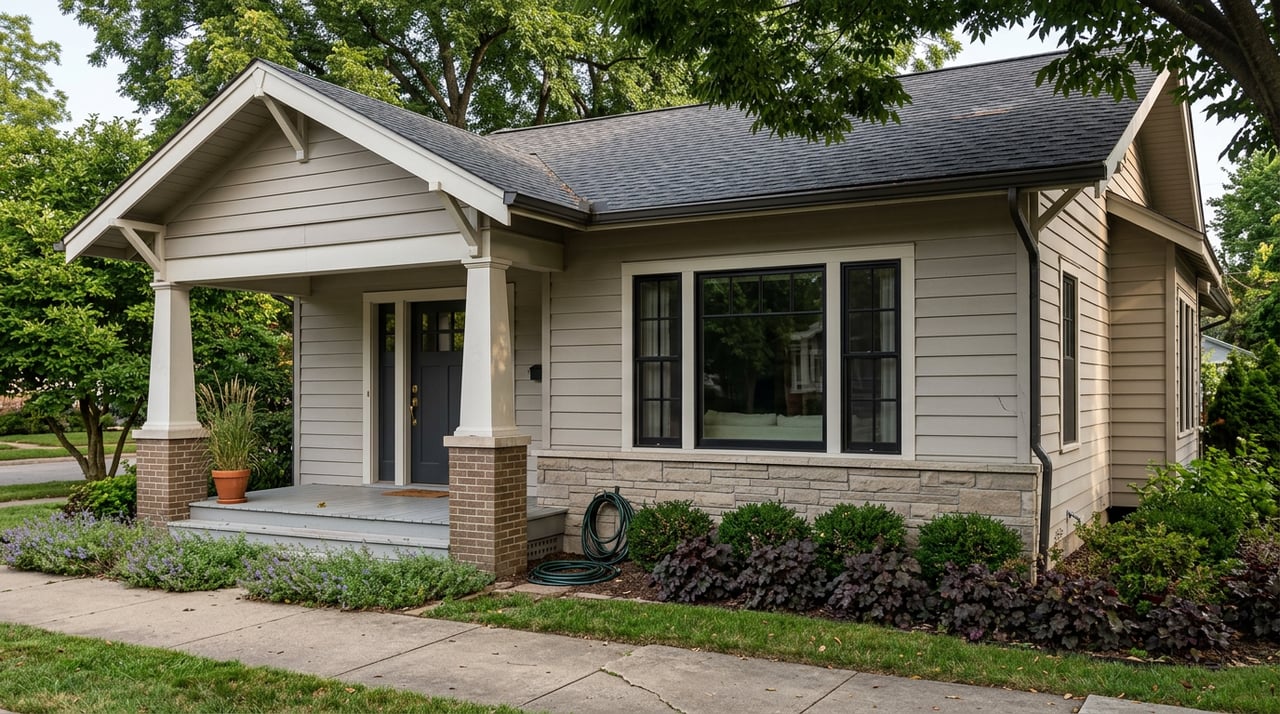
If you've been comparing Olathe neighborhoods by scrolling new-construction listings south of 151st Street, you're looking at the wrong end of the city. The homes actually outperforming the market right now sit in the opposite direction, on streets platted more than a century ago, a few blocks from the Johnson County Courthouse.
In March 2026, homes in Olathe's Original Town district sold for a median of $315,000, up 27.8 percent from a year earlier, and moved off the market in an average of 15 days. That same month, the city as a whole posted a 7.5 percent year-over-year gain and a 24-day average. Original Town isn't keeping pace with Olathe's growth story. It's outrunning it.
That gap is the thing worth understanding before you pick a side of town. It isn't random, and it isn't really about buyer taste. It's the visible result of where the city has chosen to put its money and its incentives, and it tells you something about what to expect from each part of Olathe over the next few years.
Most Olathe market write-ups report one citywide median and call it a day. But a single number hides two very different markets moving at two very different speeds.
| Metric, March 2026 | Original Town | Olathe citywide |
|---|---|---|
| Median sale price | $315,000 | $485,000 |
| Year-over-year price change | +27.8% | +7.5% |
| Average days on market | 15 (vs. 22 a year earlier) | 24 (vs. 25 a year earlier) |
| Homes sold that month | 36 (up from 32) | 175 (up from 140) |
Original Town is still the cheaper entry point in raw dollars. It's also the one appreciating almost four times faster and clearing the market in roughly two-thirds the time. If you're pricing a move by median alone, you'd never see this. You'd see a $485,000 city and assume the new subdivisions on the growth edge are where the action is.
The obvious explanation is buyer taste. The more useful explanation is policy.
Olathe runs a Neighborhood Revitalization Program built specifically for this district, rebating 90 percent of the incremental property tax increase generated by qualifying residential improvements in Original Town. That's a direct financial incentive to renovate rather than walk away from an aging house, and it applies on top of whatever the market is already doing to prices. The city's Healthy Neighborhoods Initiative layers on neighborhood grants for the same footprint, aimed at keeping residents in safe, improving homes rather than losing that housing stock to deferred maintenance.
Then there's Elevate Olathe, the city's new 15-year comprehensive plan, adopted April 21, 2026. Original Town was one of the specific sub-areas the plan singled out for its own detailed sub-plan, alongside Cedar Creek and the 175th Street corridor. When a comprehensive plan carves out a neighborhood by name for special attention, that's a signal to anyone reading the fine print that public investment is headed there on purpose, not by accident.
You can already see where some of that investment landed. A new Johnson County Courthouse and a new downtown branch of the Olathe Public Library have both opened within walking distance of Original Town's housing stock. A downtown parking garage, built in partnership with Johnson County on the current City Hall surface lot, was targeted to break ground in June 2026, with completion expected roughly 14 months later in the third quarter of 2027, more than doubling downtown parking capacity. The city has also floated relocating the downtown post office off its corner at Chestnut and Park streets to free the site for retail redevelopment, though that project stalled amid federal funding uncertainty in late 2025 and had no confirmed restart date as of the most recent public reporting. Not every piece of the plan moves on schedule, but the pattern is consistent: courthouse, library, parking, and a pending retail site, all within a few blocks of the same historic neighborhood that's posting the city's biggest price gains.
None of that shows up in a listing photo. It shows up in the appreciation rate.
If Original Town is where organic reinvestment is concentrating, the city's newest housing is being built somewhere different, and for a different reason. By year-end 2025, Olathe had approved five new single-family subdivisions totaling 138 lots, concentrated in the Mur-Len, Black Bob, and Ridgeview corridors in south and southwest Olathe. That's the growth story most buyers see first, because it's the one with active construction and open-house signs.
But Elevate Olathe's own research flagged a different problem: the plan's housing needs assessment found that roughly 43 percent of Olathe renters are cost-burdened, spending more than 30 percent of income on housing. The city's response wasn't just more subdivisions. On August 6, 2026, the Olathe City Council approved 44 townhomes and two commercial buildings at 133rd Street and Black Bob Road, a project the Johnson County Post reported is aimed at the "missing middle." The developer told the council the site requires roughly $3 million in infrastructure regardless of whether it holds 20 homes or 40, meaning more units means those fixed costs get divided more ways and each home costs less. Thirty-two of the units, at about 1,780 square feet, are priced under $500,000, which the developer called below market value.
"We want the next generation of Olatheans to be able to find a home," the developer told the council, calling the project a start.
That's a different kind of growth than what's happening in Original Town. One is policy-built attainability on new land. The other is tax-incentivized reinvestment in old land that already has the infrastructure, the courthouse traffic, and the walkability the city wants more of downtown. Both are real. They're just not the same market, and pricing them as if they were is where a lot of neighborhood comparisons go wrong.
If you're weighing a newer subdivision in the Black Bob or Cedar Creek corridors against an older house near downtown, the honest framing isn't new versus old. It's planned attainability versus incentivized appreciation.
The south and southwest corridors are where the city is actively adding supply, which tends to keep price growth more moderate because more inventory is arriving to meet demand. Original Town has almost no room to add supply. It's a fixed footprint of older homes getting renovated under a tax rebate that rewards exactly that kind of investment, in a location that's now anchored by a courthouse, a library, and (soon) more parking than it's had in decades. Fixed supply plus rising demand plus a direct financial incentive to improve the existing stock is a fairly reliable recipe for the kind of appreciation the Redfin numbers are already showing.
If your priority is a lower up-front price with more predictable, moderate growth and a broader inventory of newer floor plans, the growth corridors still make sense. If your priority is a shorter runway to equity and you're comfortable buying a home that needs work, Original Town's numbers say that bet has been paying off faster than almost anywhere else in the city, and there's a specific, documented reason why.
Is Original Town the same thing as "downtown Olathe"? They overlap but aren't identical. Original Town is the platted historic core the city uses in its own program boundaries. Downtown Olathe, the retail and government core, sits inside that footprint, but Original Town's residential streets extend beyond the storefronts.
Does the tax rebate apply automatically if I buy a fixer-upper there? The rebate is tied to the incremental property tax increase generated by a qualifying improvement, not to the purchase itself. Eligibility and documentation run through the city's Economic Development office, so confirm current program terms before assuming a specific renovation qualifies.
Will the new Black Bob townhomes pull demand away from Original Town? They're a different price segment and a different part of the city, built to add starter-level supply on the growth edge rather than compete with renovated homes near downtown. The two projects are solving different problems for different buyers.
Comparing Olathe neighborhoods on median price alone will tell you where homes cost less. It won't tell you where the momentum actually is or why. If you want help reading a specific block or a specific renovation against what the city's incentives and investment actually support, Hannah Murrell and The Red Bow Standard can walk through it with you. Schedule Your Strategy and start the conversation.
Explore additional articles offering fresh perspectives on Kansas City real estate and lifestyle.
Partner with Murrell Signature Real Estate Group and enjoy a real estate experience that’s personal, polished, and powerful.
MURRELL SIGNATURE REAL ESTATE GROUP
ADDRESS 4200 SOMERSET DR PRAIRIE VILLAGE KS 66208